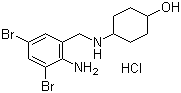
Ambroxol is an unusual example of a drug that emerged from the metabolism of another drug. Bromhexine, a synthetic mucolytic inspired by the alkaloid vasicine from Adhatoda vasica, is metabolized in the body to several products. Ambroxol is its active N-desmethyl metabolite. Instead of remaining merely a metabolic footnote, ambroxol itself became a widely used expectorant and bronchosecretolytic medicine, most commonly supplied as the hydrochloride salt.
The clinical idea is mechanical rather than antibiotic: change the physical environment of airway secretions so mucus can be transported more effectively. Mucus protects the respiratory tract, but when it becomes too viscous or clearance is impaired, coughing and mucociliary transport become less efficient. Experimental studies found that ambroxol affects tracheal mucus secretion and can increase the proportion of disaturated phosphatidylcholine in pulmonary lavage, an important component class of lung surfactant. These observations support a mechanism broader than simply "diluting" mucus.
Ambroxol also became scientifically interesting because its pharmacology extends beyond secretion. Laboratory and clinical research has examined local anesthetic-like sodium-channel effects, anti-inflammatory actions, antioxidant behavior, and lysosomal biology. Particularly notable is the finding that ambroxol can act as a pharmacological chaperone for glucocerebrosidase in experimental systems, stimulating research in Gaucher disease and Parkinson disease. Those studies do not mean that ordinary ambroxol cough preparations are established treatments for neurodegenerative disease; experimental repurposing and approved use must be kept distinct.
The hydrochloride form illustrates another pharmaceutical principle. Ambroxol contains basic amine functionality; converting it to a hydrochloride salt produces a defined ionic solid with useful handling and formulation properties. The pharmacologically active entity is ambroxol, while the salt form helps turn the molecule into a reproducible medicine. Many familiar drugs reach patients through this apparently modest but crucial form of crystal and salt engineering.
Another reason ambroxol remained clinically useful is that airway clearance is a systems problem. Ciliary beating, mucus viscosity, hydration, surfactant, inflammation, and cough all interact. No single measurement captures the whole effect. This explains why mechanistic papers can emphasize secretion or surfactant while clinical use is described more broadly as mucolytic or expectorant therapy. The drug's history is therefore a useful warning against reducing a respiratory medicine to one molecular target when its practical effect emerges from several coupled physical and biological processes.
Ambroxol matters because its story crosses natural-product inspiration, drug metabolism, pulmonary physiology, and modern repurposing research. A metabolite of bromhexine became a medicine in its own right, then a probe for questions far removed from cough treatment. It is a good reminder that metabolism does not merely deactivate pharmaceuticals. Sometimes metabolism reveals a molecule whose biological properties are important enough to begin an entirely new chapter.
References:
1. Gupta PR. Lung India. 2010;27:46-48. DOI: 10.4103/0970-2113.63607.
2. Uchida M et al. Nihon Yakurigaku Zasshi. 1992;100:293-300. DOI: 10.1254/fpj.100.293.
3. McNeill A et al. Brain. 2014;137:1481-1495. DOI: 10.1093/brain/awu020.
4. PubChem. Ambroxol hydrochloride, CAS 23828-92-4.
|





 GHS07 Warning Details
 chemBlink Chemical Story